Argentina grants asylum to Brasília rioter in move that may sway Brazil vote
Decision to shield pro-Bolsonaro truck driver sentenced for 8 January 2023 attack could inflame Brazil election politicsArgentina has granted asylum to a Brazilian fugitive convicted for his role in 2023 pro-Bolsonaro riots – a decision that analysts say could reverberate in Brazil’s upcoming...
<p>Decision to shield pro-Bolsonaro truck driver sentenced for 8 January 2023 attack could inflame Brazil election politics</p><p>Argentina has granted asylum to a Brazilian fugitive convicted for his role in 2023 pro-Bolsonaro riots – a decision that analysts say could reverberate in <a href="https://www.theguardian.com/world/brazil">Brazil</a>’s upcoming presidential election.<br><br>
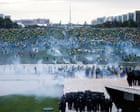
A week after Luiz Inácio Lula da Silva, Brazil’s president, took office, hundreds of people ransacked Brazil’s congress building, presidential palace and supreme court on 8 January 2023, in an attempt to overturn former president Jair Bolsonaro’s electoral defeat. Investigators later concluded the attacks were the culmination of <a href="https://www.theguardian.com/world/2025/sep/05/jair-bolsonaro-trial">a broader plot aimed at staging a coup.</a><br><br>
Alongside Bolsonaro and members of his inner circle, who were <a href="https://www.theguardian.com/world/2025/sep/11/brazil-supreme-court-bolsonaro-guilty-coup">convicted for their role in the plot</a>, hundreds of rioters were given sentences of up to 17 years in prison for vandalism and insurrection. <a href="https://www.theguardian.com/world/article/2024/jun/13/brazil-bolsonaro-rioters">Dozens fled to Argentina</a> after Javier Milei, a rightwing libertarian, took office in December 2023.<br><br>
In 2024, <a href="https://www.theguardian.com/world/2024/nov/16/argentina-seeks-arrests-of-61-rightwing-rioters-from-brazil">Brazil requested the extradition of 61 of its citizens</a>. Argentine federal police arrested five of them, and in December, a federal judge ordered their extradition.</p><p>But this week, one of them – Joel Borges Correa, 47, was informed that Argentina’s refugee commission (Conare) – which operates under the security ministry – ruled that he should be granted asylum. <br><br>
Borges Correa had applied for asylum in 2024, one of 196 Brazilians who sought refugee status in Argentina that year, according to official data. In his testimony, he said he had gone to the government buildings carrying a Brazilian flag to protest against “Lula’s projects in favour of abortion and the legalisation of drugs” – policies that have not been enacted. <a href="https://www.theguardian.com/world/2023/jan/09/brazil-failed-coup-wreckage">He was arrested inside the Planalto presidential palace, the president’s official workplace,</a> and later sentenced to 13 years and six months in prison.<br><br>
In April 2024, attempting to avoid arrest, Borges Correa cut off his ankle monitor and drove to the Argentine border with three other convicted fugitives. Conare concluded that Borges Correa faced discrimination and persecution because of his political opinions, which it said could be “inferred from his participation in the mobilisation on 8 January”, and that the “Brazilian state is the main persecuting agent”.<br><br>
“There is a very evident human rights issue, a matter of political persecution,” said Pedro Gradin, Borges Correa’s lawyer. “With asylum granted, he will regularise his immigration status. Now they must release him and remove his ankle monitor so that he can live his life like any other citizen.”</p> <a href="https://www.theguardian.com/world/2026/mar/11/argentina-asylum-brasil-elections">Continue reading...</a>
A week after Luiz Inácio Lula da Silva, Brazil’s president, took office, hundreds of people ransacked Brazil’s congress building, presidential palace and supreme court on 8 January 2023, in an attempt to overturn former president Jair Bolsonaro’s electoral defeat. Investigators later concluded the attacks were the culmination of <a href="https://www.theguardian.com/world/2025/sep/05/jair-bolsonaro-trial">a broader plot aimed at staging a coup.</a><br><br>
Alongside Bolsonaro and members of his inner circle, who were <a href="https://www.theguardian.com/world/2025/sep/11/brazil-supreme-court-bolsonaro-guilty-coup">convicted for their role in the plot</a>, hundreds of rioters were given sentences of up to 17 years in prison for vandalism and insurrection. <a href="https://www.theguardian.com/world/article/2024/jun/13/brazil-bolsonaro-rioters">Dozens fled to Argentina</a> after Javier Milei, a rightwing libertarian, took office in December 2023.<br><br>
In 2024, <a href="https://www.theguardian.com/world/2024/nov/16/argentina-seeks-arrests-of-61-rightwing-rioters-from-brazil">Brazil requested the extradition of 61 of its citizens</a>. Argentine federal police arrested five of them, and in December, a federal judge ordered their extradition.</p><p>But this week, one of them – Joel Borges Correa, 47, was informed that Argentina’s refugee commission (Conare) – which operates under the security ministry – ruled that he should be granted asylum. <br><br>
Borges Correa had applied for asylum in 2024, one of 196 Brazilians who sought refugee status in Argentina that year, according to official data. In his testimony, he said he had gone to the government buildings carrying a Brazilian flag to protest against “Lula’s projects in favour of abortion and the legalisation of drugs” – policies that have not been enacted. <a href="https://www.theguardian.com/world/2023/jan/09/brazil-failed-coup-wreckage">He was arrested inside the Planalto presidential palace, the president’s official workplace,</a> and later sentenced to 13 years and six months in prison.<br><br>
In April 2024, attempting to avoid arrest, Borges Correa cut off his ankle monitor and drove to the Argentine border with three other convicted fugitives. Conare concluded that Borges Correa faced discrimination and persecution because of his political opinions, which it said could be “inferred from his participation in the mobilisation on 8 January”, and that the “Brazilian state is the main persecuting agent”.<br><br>
“There is a very evident human rights issue, a matter of political persecution,” said Pedro Gradin, Borges Correa’s lawyer. “With asylum granted, he will regularise his immigration status. Now they must release him and remove his ankle monitor so that he can live his life like any other citizen.”</p> <a href="https://www.theguardian.com/world/2026/mar/11/argentina-asylum-brasil-elections">Continue reading...</a>
Read the full article at:
The Guardian World →